

HALL THRUSTERS
Leading edge propulsion to enable a new class of spacecraft missions.
Scalable solutions for any application.
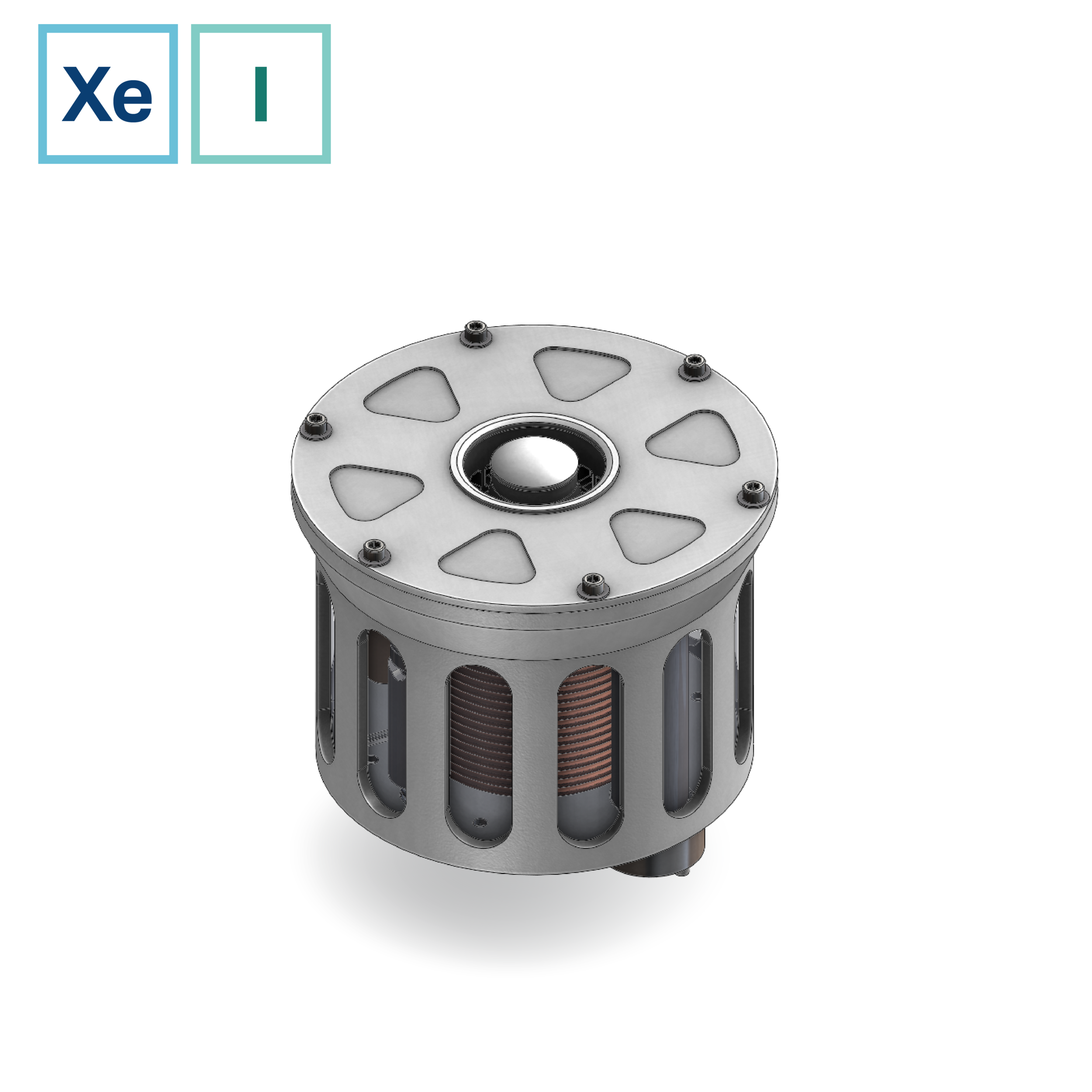
BHT-100
Compact and versatile.
Precisely engineered.
Input Power: 100 W
Thrust: 7 mN
Specific Impulse: 1000 s
Demonstrated Impulse: 45 kN⋅s
Total Impulse: >250 kN⋅s
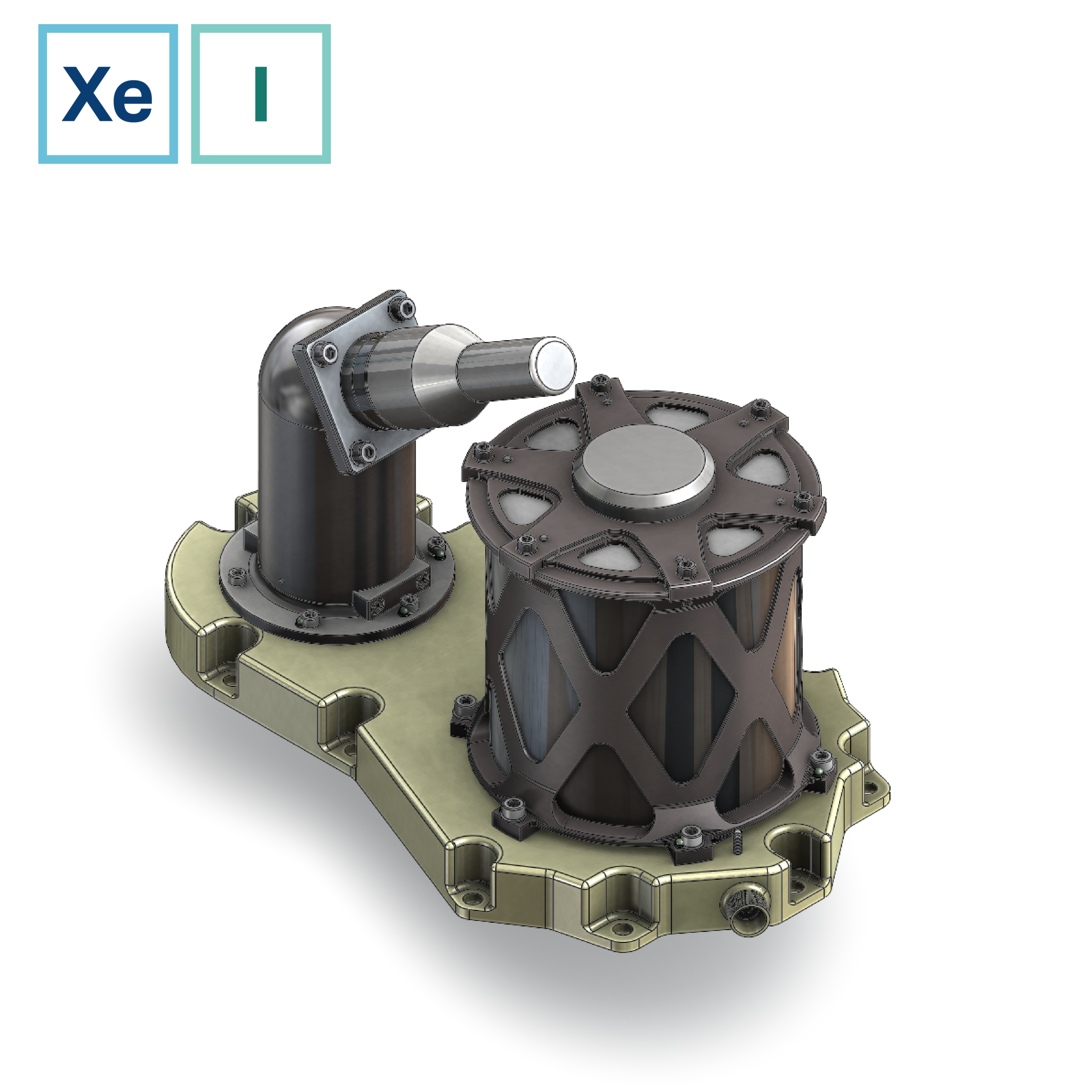
BHT-200
The first US Hall thruster in space; still best in class.
Input Power: 200 W
Thrust: 13 mN
Specific Impulse: 1390 s
Demonstrated Impulse: 75 kN⋅s
Total Impulse: >140 kN⋅s

BHT-350
Designed for high volume. Perfect for constellations.
Input Power: 300 W
Thrust: 17 mN
Specific Impulse: 1244 s
Demonstrated Impulse: 244 kN⋅s
Total Impulse: >250 kN⋅s
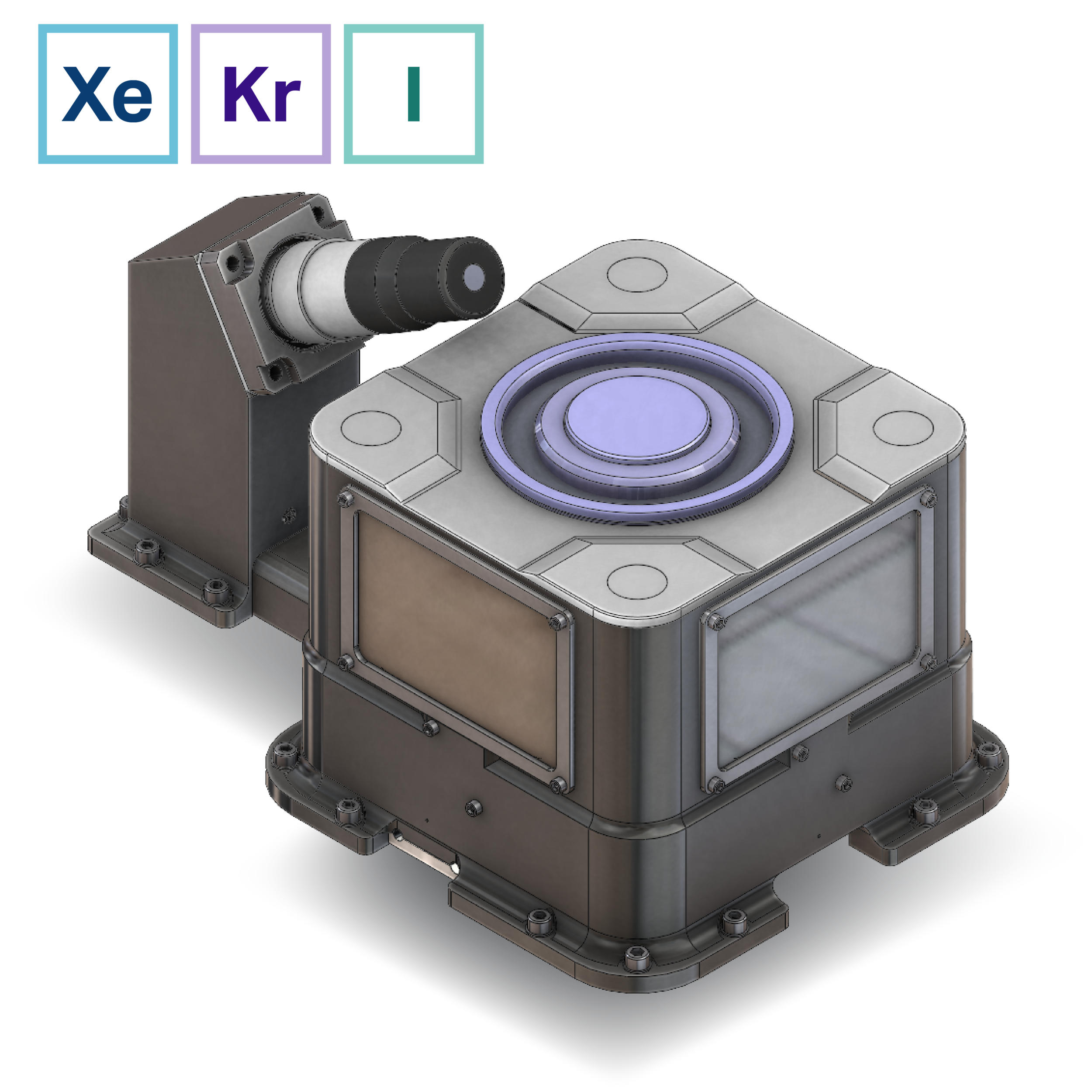
BHT-600
Made for small satellite high delta-V missions.
Input Power: 600 W
Thrust: 39 mN
Specific Impulse: 1300-1500 s
Demonstrated Impulse: 1.0 MN⋅s
Total Impulse: >1.0 MN⋅s

BHT-1500
First commercial center-mounted cathode design.
Input Power: 1500 W
Thrust: 101 mN
Specific Impulse: 1710 s
Demonstrated Impulse: Pending
Total Impulse: >6.5 MN⋅s

BHT-6000
High performance. Flying on NASA’s Artemis mission.
Input Power: 6000 W
Thrust: 201-320 mN
Specific Impulse: 1900-2600 s
Demonstrated Impulse: Pending
Total Impulse: >8.5 MN⋅s

BHT-20K
Our largest thruster to date. Unparalleled power.
Input Power: 20000 W
Thrust: 1005 mN
Specific Impulse: 2515 s
Demonstrated Impulse: Pending
Total Impulse: >35 MN⋅s
Performance metrics displayed were measured with xenon propellant.
Thrusters not depicted to scale.
Why use Hall-effect thrusters?
Hall thrusters generate thrust by creating and accelerating ionized gas via an electric field. Confined within a finely shaped magnetic field, electrons gyrorotate within the channel until they ionize a neutral atom. The ionized plasma is then accelerated by the electric field to exhaust velocities of greater than 25,000 m/s.
With no moving mechanical parts and a simple electrical layout, Hall thrusters are extremely reliable; no on-orbit thruster failures have been reported to-date.
The high specific impulse of Hall thrusters leverages the nonlinear nature of the rocket equation. Every additional second of specific impulse leads to an exponential improvement in the spacecraft mass ratio.


While the best existing chemical engines have a specific impulse of around 400 s, our high power thrusters have over 2500 s. For the same propellant mass fraction, a spacecraft with our Hall Thrusters will have over 6x the delta-V. Without the space-charge limitations that are encountered when using some other EP technologies, Hall thrusters are compact and offer the optimum balance of high specific impulse and thrust-to-power. Electric propulsion is mission-enabling, and allows for unprecedented amounts of flexibility for orbit raising, cislunar maneuvers, interplanetary transfers and beyond.
Better-than-rockets science
As part of Busek’s continuing research, we conducted a study of a high total impulse electric upper stage for small launch vehicles.
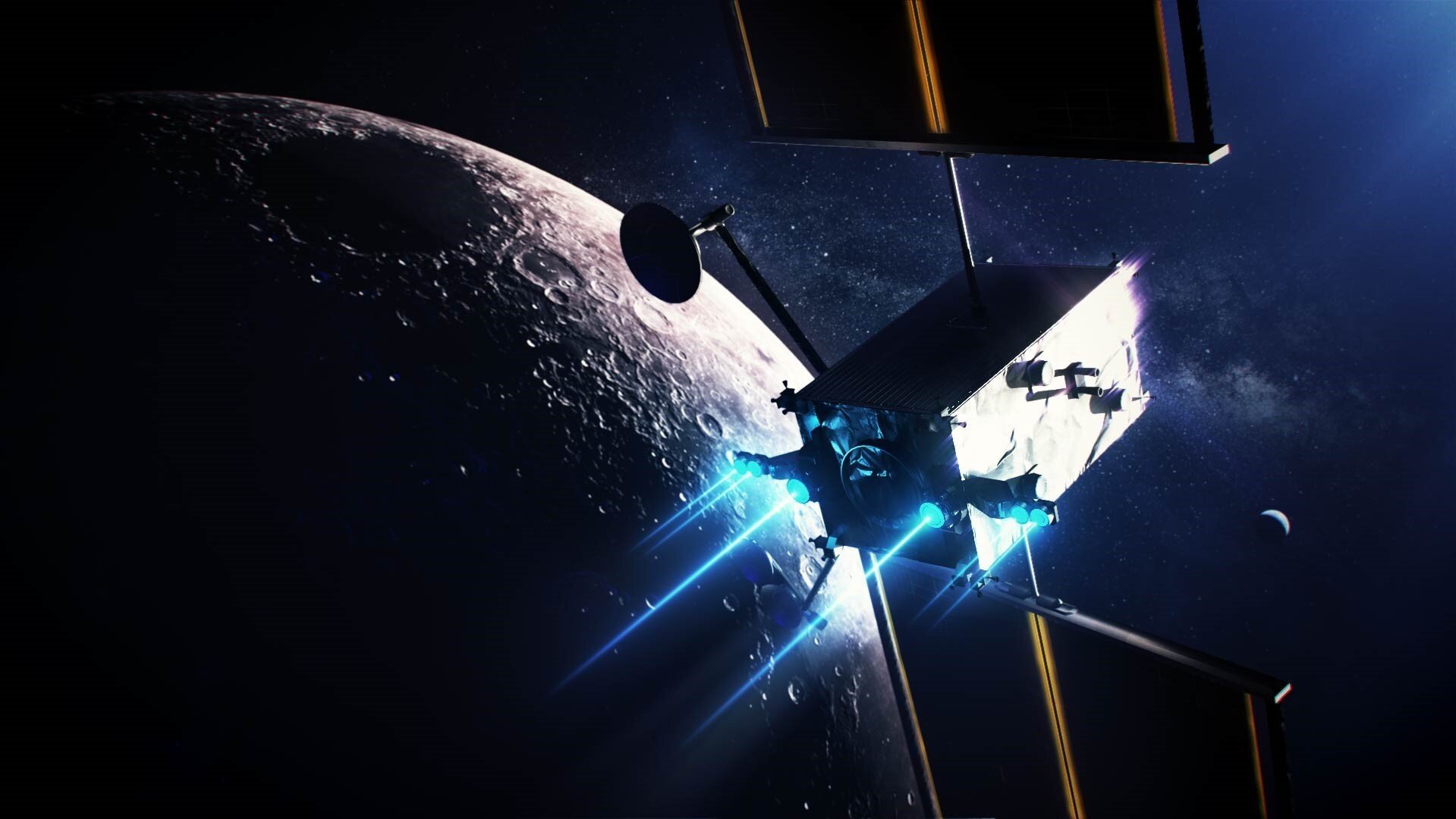
Powered by two BHT-600 thrusters, a small payload in low Earth orbit can be delivered to low lunar orbit. This incredible amount of range is unachievable for any chemical propulsion system in the same weight class.
Case: Small satellite with EP
Spacecraft wet mass: 300 kg
Propulsion: 2x BHT-600 Hall thruster
Starting orbit: LEO, 180 km x 550 km, 28 degree inclination
Propellant: 135 kg xenon
Final orbit: Low lunar orbit, 100km x 100km
Delta-V: 8.70 km/s
LEO to MEO: 192 days
LEO to GEO: 245 days
LEO to LLO: 422 days
Flight Heritage.
FIRST US HALL THRUSTER IN SPACE - LAUNCHED 2006
On December 16, 2006 the AFRL TacSat-2 satellite was launched with Busek’s 200W Hall Thruster for primary propulsion. The primary objective was to demonstrate improved microsat maneuverability. Plume measurements and on-board diagnostics verified thruster performance in space.

Which propellant should I use?
Each mission has unique requirements and tradeoffs. Busek has tested thrusters on propellants such as:
Noble gases including xenon, argon, and krypton.
Iodine
Metals like bismuth, zinc, and magnesium
Air (N2/O2)


Xenon is the traditional propellant of choice for Hall thrusters. With lower ionization potential than krypton, it is the most efficient propellant due to its loosely held electrons. As a noble gas, it is unreactive and safe to handle.

Krypton is a lower cost propellant than xenon, and with a higher ionization potential is a less efficient propellant. Thrusters running on krypton tend to experience higher erosion, and have slightly higher Isp at comparable powers at the cost of less overall thruster efficiency.

Iodine as a propellant is being pioneered by Busek. With virtually the same performance as xenon, it is dramatically less costly and stores very densely as a solid, eliminating the need for fragile and large propellant tanks. Iodine thrusters require special attention to corrosion in their components.

Innovating for fourty years.
Since Busek’s founding, we have contributed to fundamental Hall thruster research, and our designs benefit from deep expertise in plasma physics. We maintain in-house capabilities to model every aspect of our thrusters.
Every Busek thruster is meticulously engineered to meet or exceed environmental standards, including vibe, shock, fluid, thermal, electrical, plasma, radiation, venting, and magnetic.

Design. Build. Test. Repeat.
Our collection of three massive vacuum tanks for multi-kilowatt thrusters and over twenty other test chambers constitute one of the largest and most advanced private vacuum testing facilities in the world.
We endlessly iterate on our designs with data from decades of operating world-class diagnostics. We’ve been making and refining our hardware for thirty five years, and our thrusters show it with the best performance in the industry.

Available in batch sizes of one or thousands.
Our thrusters are assembled in house, with our skilled technicians and engineers handling every step of the process for industry-leading traceability. Our processes drive products that exceed aerospace and defense standards while maintaining high volume and high reliability.
Busek is AS9100 and ISO 9001 certified. We provide products for the most demanding defense and commercial applications, and we’re proud to say that our products are exclusively manufactured and assembled in the USA.
Need help deciding how electric propulsion can enable new possibilities for your mission?
Busek’s engineers are experienced in all facets of space propulsion research, design, development, construction and delivery of lab-model and flight hardware, allowing us to provide you with realistic application analysis, requirements and cost estimates. Whether it is to support integration of our flight propulsion systems or deliver a fully integrated spacecraft, Busek systems team will provide a thorough, detailed analysis to meet mission requirements.
Our scientists and engineers model orbital maneuvers with state of the art mission analysis tools published by NASA. For maneuvers like station keeping in low Earth orbit or transitions to cislunar space and beyond, we know the tricks of the trade to get the most efficient transfers with electric propulsion.